
The Secret to Perfect French Onion Soup (Most People Get This Wrong)
Soupe à l'Oignon Gratinée — the dish that defines French comfort food, made the right way.
Some dishes define a cuisine. French Onion Soup — Soupe à l'Oignon Gratinée — is one of them. It is humble in its ingredients: onions, stock, bread, cheese. But in the hands of a French chef, it becomes something extraordinary — a deep, rich, soul-warming bowl that has been comforting people for centuries.
In this post, I'm going to walk you through the authentic French method — no shortcuts, no compromises. You'll understand not just what to do, but why each step matters. Because once you understand the technique, you'll never make a mediocre French onion soup again.
"The secret to French onion soup isn't a recipe. It's patience. The onions will tell you when they're ready — and you'll know it when you smell it." — Chef Eric Duvin
A Taste of History
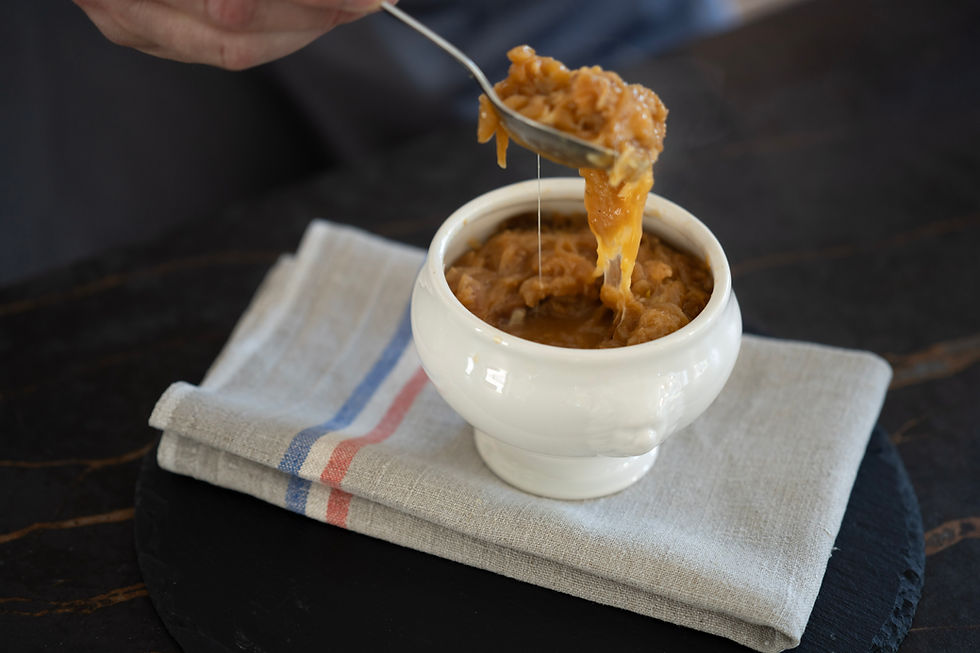
French Onion Soup traces its origins to ancient times, when onions were among the most affordable and available ingredients for both the wealthy and the poor. But the dish as we know it today — caramelised onions, rich beef broth, toasted bread, melted cheese — took shape in 18th-century France.
One popular legend credits King Louis XV, who, finding himself at a hunting lodge with only onions, butter, and champagne, improvised a soup that became a royal favourite. Another story points to the legendary Les Halles market in Paris, where merchants and night workers warmed themselves with hearty bowls of onion soup in the early hours before dawn.
By the 19th century, Parisian brasseries had elevated the dish further — adding rich beef stock and introducing the iconic gratiné finish with melted cheese on top. That version is what Chef Eric makes to this day, unchanged in its essence, timeless in its appeal.
Did You Know?
French onion soup is traditionally served in deep, ceramic bowls specifically designed to withstand the intense heat of broiling. This ensures the Gruyère cheese melts evenly and forms that perfectly golden, bubbling crust that makes the dish so irresistible.
Go Further with Our 12-Week French Cooking Program
For those who want a deeper and more complete culinary journey, our 12-Week French Cooking Course offers a structured program covering the essential foundations of traditional French cuisine.
This comprehensive course guides you through the techniques used in classic French kitchens—from knife skills and sauces to traditional dishes and elegant desserts. Each lesson focuses on helping you understand not only how to cook a recipe, but why the techniques work.
Whether you’re passionate about French gastronomy or looking to significantly improve your cooking skills, this program provides a step-by-step path to mastering the fundamentals of French cooking.

Chef Eric's Professional Tips
🍳 Chef's Tips
Slow caramelisation is non-negotiable. Cook on medium-low for 40–60 minutes. Any faster and you're steaming, not caramelising — you'll get soft onions with none of the depth.
Deglaze with purpose. Wine, dry vermouth, or even a splash of brandy — scrape every last bit of fond from the bottom of the pot. That's where the flavour lives.
Stock quality matters. Use a rich homemade beef or veal stock if you can. If using store-bought, choose the lowest-sodium option and reduce it slightly first to concentrate the flavour.
Gruyère is the right cheese. Its nutty flavour and exceptional melting properties are specifically what make the gratiné work. A little Parmesan mixed in adds an extra layer of complexity.
Copper pot advantage. The even heat distribution of a copper pot is ideal for the long caramelisation — it prevents hot spots that would scorch your onions before they properly caramelise.
The Science Behind the Dish
Caramelisation is the chemical process at the heart of this recipe. When onions are slowly cooked, their natural sugars break down and transform — creating hundreds of new flavour compounds that produce that characteristic deep sweetness and rich amber colour. This process cannot be rushed without losing those compounds entirely.
Deglazing is the technique of adding liquid to a hot pan to dissolve the browned proteins and sugars (the fond) stuck to the bottom. These solids carry intense, concentrated flavour — incorporating them into the soup is what gives it its complexity.
The gratiné technique — broiling cheese on top of the soup — creates a golden, slightly crisp crust through the Maillard reaction, adding a textural contrast and a nutty, roasted flavour that perfectly balances the sweetness of the caramelised onions below.
⏱ Recipe Overview
Prep Time: 15 minutes
Cook Time: 2 hours
Servings: 4–6
Equipment Needed
Thick-bottomed pot (preferably copper or heavy steel)
Baking tray
👉 Shop the tools I use: https://www.amazon.com/shop/legourmetfrenchchef?ccs_id=2cbda9fc-c415-4ba3-9903-a2d4e3cc0aa5
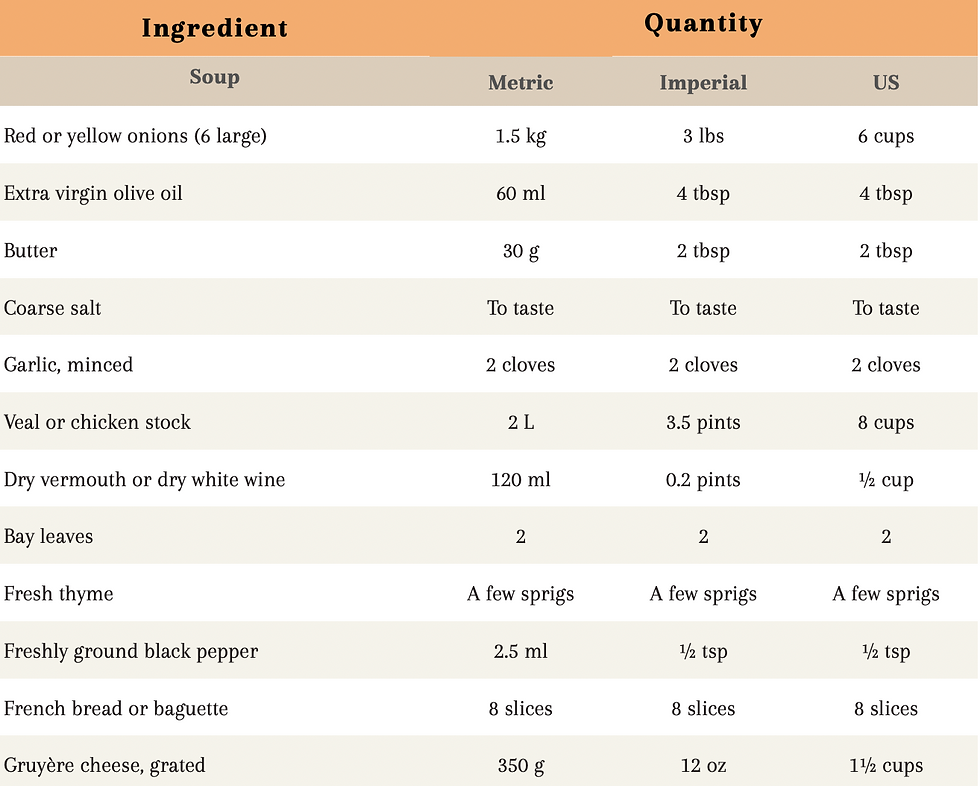
METHOD
Prepare the Onions
Peel and thinly slice the onions from root to stem. Slice along the grain, this gives you long, even strips that caramelise uniformly. Discard the root ends. Don't rush this step: the quality of your slice determines how evenly the onions cook.
Caramelise the Onions — The Most Important Step
Heat 3 tablespoons of olive oil in your thick-bottomed pot over medium heat. Add the sliced onions and toss to coat. Cook, stirring often, until softened, about 15–20 minutes. Add the remaining tablespoon of olive oil and the butter. Continue cooking, stirring frequently, for 40–60 minutes until the onions are deep golden brown and fully caramelised. Do not rush this. The slow breakdown of sugars in the onion is what creates the soup's deep, complex flavour.
Add Garlic & Deglaze
Add the minced garlic and cook for 1 minute. Pour in the vermouth or wine, then use your spatula to scrape up all the browned bits from the bottom and sides of the pot. This is deglazing, those browned bits (the fond) are packed with concentrated flavour that will transform your soup base.
Simmer the Soup
Add the stock, bay leaves, and thyme. Bring to a simmer, then cover and reduce the heat to maintain a low, gentle simmer. Cook for 30 minutes. Season generously with salt and freshly ground black pepper. Remove the bay leaves and thyme sprigs before serving.
Toast the Baguette
Preheat your oven's broiler. Slice the baguette and toast the slices until golden brown on both sides. The toast must be firm enough to float on the soup without instantly sinking, this structural integrity is what holds the cheese layer.
Assemble & Broil — The Gratiné
Ladle the hot soup into oven-safe bowls. Place a toasted baguette slice on top of each bowl. Generously cover with grated Gruyère, don't be shy. Place the bowls on a baking tray and broil for 3–5 minutes, until the cheese is completely melted, bubbling, and golden brown with slightly darker edges.
Serve Immediately
Carefully remove the bowls from the oven, they will be extremely hot. Garnish with a fresh thyme sprig or chopped chives if desired. Serve immediately. French onion soup waits for no one.
Go Further with Our 12-Week French Cooking Program
For those who want a deeper and more complete culinary journey, our 12-Week French Cooking Course offers a structured program covering the essential foundations of traditional French cuisine.
This comprehensive course guides you through the techniques used in classic French kitchens—from knife skills and sauces to traditional dishes and elegant desserts. Each lesson focuses on helping you understand not only how to cook a recipe, but why the techniques work.
Whether you’re passionate about French gastronomy or looking to significantly improve your cooking skills, this program provides a step-by-step path to mastering the fundamentals of French cooking.
hes authentic French cuisine step-by-step in his online programs at Le Gourmet French Chef. From sauces to soufflés, from knife skills to complete menus — learn at your own pace, in your own kitchen.


Comments